Washington Metro Expansion

Andrew Bishop
History
Washington is one of many new towns in the North East, but what sets it apart from the likes of Cramlington and Peterlee is that there is no rail connection whatsoever, putting it 4th on that list nationally. But the town sits on a rail line, why doesn't it get any service? The Leamside line was opened in 1844, and cut straight through Washington, but it closed to passengers in 1960, just four years before Washington was even designated as a town (as it was just a tiny village before), and ten before construction actually started. The Leamside line connected Pelaw down to Ferryhill, to at which point services would continue onto the East Coat Mainline. The original length was around 34 kilometres, with only 13 kilometres having solid plans to reopen.
What is planned?
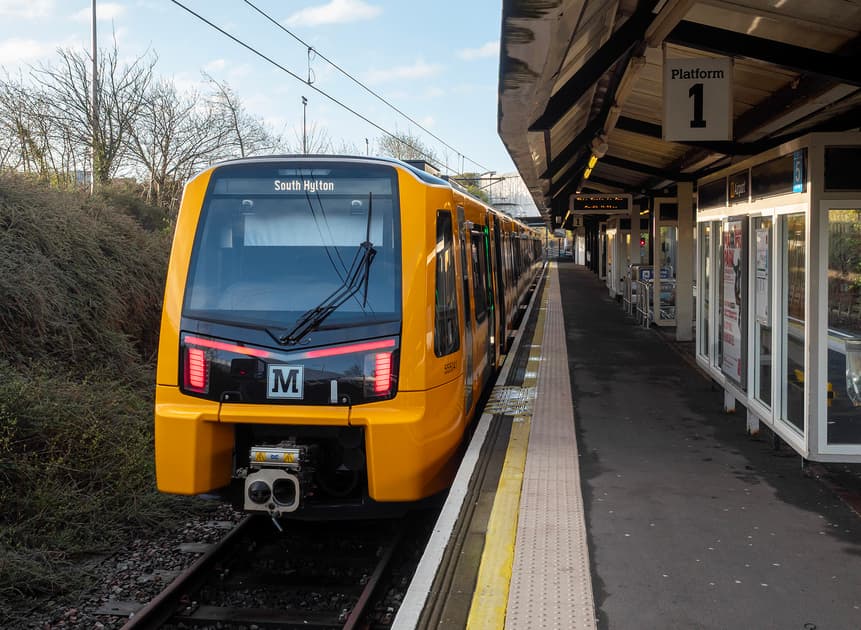
The current plan isn't to reopen the entire Leamside line, but instead reinstate a 13 kilometre stretch, including a section which was never on the Leamside line (South Hylton --> Washington South). So, were is it going from, what stations is it passing through, and were will it end up? The current plan is to start from South Hylton, head West and onto the Leamside line, then North to Washington South, Washington North, Follingsby and then up to Pelaw for a connection with the yellow line as well. All of the new stations serve areas with currently no rail service. Kim's NECA has been able to secure a significant proportion of the £900 million projected cost out of their £1.85 billion CRSTS2 funding package.
The Good
Washington is famous for one key thing, and it's not the galleries. The Nissan factory in Washington currently employs around 6,000-7,000 people, and only as 3 different bus routes, all with a heavy focus on the South of Tyne area. The new station of Washington North should improve regional labour mobility, and also reduce transport related social exclusion for the workforce, and even drive some workers out of their private vehicles. Just building this short stretch of the line opens the door to full reinstatement of the Leamside line. If we take the Northumberland Line as an example, passenger predictions were massively exceeded, and NECA is looking to secure funding to further expand the line, even considering to lay new track. Building the Metro extension therefore allows for a much better argument for the full reinstatement, which should hopefully skip a few steps for if this eventually does happen, but then opens even more doors in the area for investment in transport, as we've seen great success with the other major rail project, success with the dualling of the Metro by South Shields, and even moderate success with the BSIP, so how would this project be any different. The main benefit with opening the entire line again is that it can act as a way to divert freight away from the ECML, allowing for more passenger services between London and Edinburgh, or even just intermediate stops. Many people tend not to like buses, whether it be because of reliability, getting stuck in traffic, or inefficient routes, the Metro will provide them with a low carbon alternative to driving, while being able to beat traffic into the city centres, with Kim estimating that carbon emissions will be reduced by 87,000 tonnes per year. This comes along with cleaner air for everyone, and quicker commutes for those who continue to drive. And it's not just 6-7,000 works in one site in Washington that'll benefit, as in Washington alone, there are roughly 70,000 residents who will gain a quick and direct link to both city centres and the airport. Considering that Washington isn't where most of it's own residents work, this ease of access to other key employment hubs should be of a major benefit to those living there.
Slight Issues
A somewhat major issue with all of the new stations is that they're all located on the urban fringe, not serving the centre of the population. This is worsened by Washington's urban morphology, with its somewhat sprawling cul-de-sacs, creating a fragmented urban fabric, massively reducing the stations pedestrian catchment area. For those that live in the more Western "villages" of Washington, this is only made worse by their isolation, making their commute to the station quite hostile. Currently, before a single shovel is planted into the ground, an estimated £8.6 million is going to be spent on creating a business case, quite a bit more than the Northumberland Line. While the projected cost for anything built for the public should be taken as a complete joke, seeing the cost rise from £745 million in 2022 to £900 million currently, even without the business case being completed, is quite shocking, especially considering that construction won't start for another year or so, and the line isn't expected to open until 2033, given there aren't any delays, so more like 2037. For £900 million, you would expect a bit more than 3 stations, considering that the Northumberland Line cost only £336.4 million, and delivered 6 stations. Yes, track was already there, lots of the heavy lifting was done already, but £900 million for so little. In France, one kilometre of high speed rail costs from €20-€30 million. This project for the Metro, with the current budget that will inevitably end up costing more, is at £69 (~€80) million per kilometre. And even with this cost, there isn't going to be a station in Wardley, whose residents either have a long walk to Metro, or need to pay for a bus as well. Cutting costs by excluding areas that really should have rail stations, especially considering the increasingly urbanised area, we are just pushing the cost into the future, where it'll cost significantly more than it will if we just bother now. While you can't argue that it's a "vanity project", it doesn't make sense why they're not making the most of the opportunity, and be a bit ambitious with regards to their plan.
Conclusion
It's going to be successful. There's no reason it wouldn't be. In the North East, we are so lucky to have a light rail system considering our density and population, and its one that is well used. While nothing is actually set in stone, the chance is that the current plan is what they're going to go with. Having a new section of the Metro build to modern standards, so no asbestos in the stations, ticket barriers, and the continued great accessibility is great to see, and will reduce friction for so many across the region. In 15 years time, when the line is hopefully in operation, who knows what it'll bring.
Commission may be made through links on this page.
All content has been researched, and should be accurate at the time of publishing
If there are errors in the content, or you have a general enquiry, email [email protected]