Northumberland Line, how much better could it have been?

Andrew Bishop
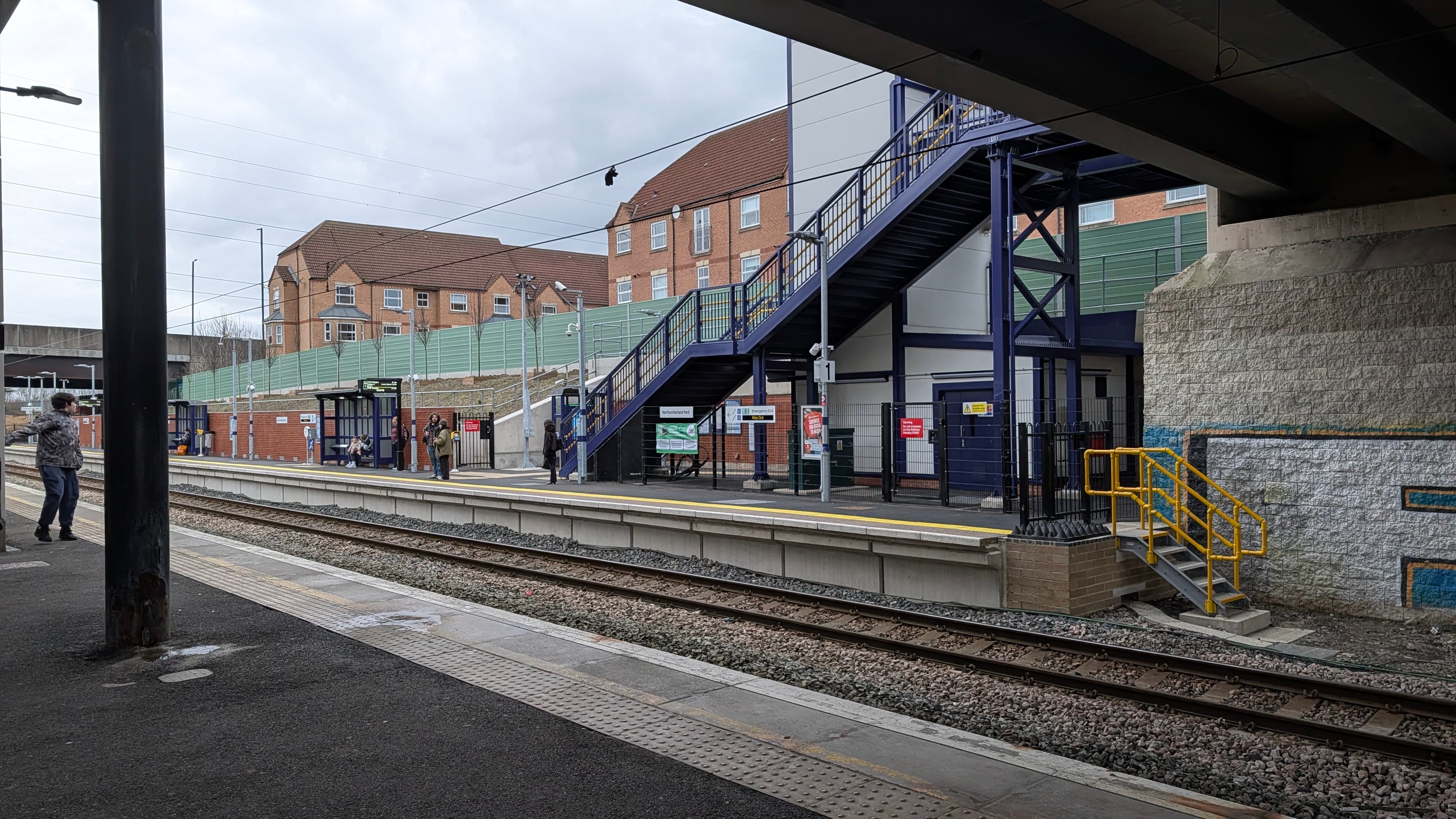
About a year and a half from its opening, the Northumberland Line has been a huge success, with passenger numbers exceeding expectations. However, while it's great to see the line thriving, it's also quite a bit of a missed opportunity.
The Good
It is really undeniable that there are countless benefits from the project, and to be fair, nobody is thinking that, even politicians from parties that tend to be more critical of public transport and net-zero.
But who cares what politicians think? Real people are using the line, and that's fantastic. Especially since it has been 61 years in some cases since the line, in some form, was is in operation, and some stations are entirely new, serving developments that have only popped up in the past 20 years or so.
The key benefit is that a journey from Ashington to Newcastle, is timetabled to take 60 minutes by bus, which isn't the case in rush hour, has been cut down to 35 minutes, with traffic being less of an issue on rails. The cost further adds to the competitive edge that the line has, as a bus fare is capped at £2.50, thanks to Kim, while the train fare £2.40 peak, and only £2.00 off peak. Season tickets are sold, with a yearly ticket costing £768, which is roughly £3.03 per working day, per year. Only the 16-17 railcard can be applied to season tickets, bringing the cost down to £384, or £501.80 without a railcard. Over 18 students have a yearly season ticket at £518.50. PAYG via the Pop card is also an option, with Metro season tickets also being valid. PAYG is capped at £1 for any journey for Under 22's at the minute, with everyone else paying the same fare from the ticket machines. Bus season tickets are much more expensive, as Arriva don't sell an Ashington routesaver, if you want one simple yearly ticket, it's £1,440, which is also only valid on Arriva Northumbria & North East buses. Buying two singles at for £1265 (based on average days worked per year), is cheaper. But it's pointless arguing which ticket option is better for the buses, as the train is just so much cheaper, and faster.
Cars are no longer the best way to get to the city, based on speed alone. During rush hour, the Spine Road experiences lots of congestion, especially by the Moor Farm roundabout, pushing times from Ashington to the city past 1 hour on some cases. Even if you were to travel at 3am on a Sunday morning, you can only really complete the journey in 35 minutes, excluding parking. With the cost of petrol and diesel surging recently, along with the quicker journey times, and lower emissions, this new line does look quite transformative.
One of the biggest benefits has got to be integration with the Metro, even if it is a bit shoddy. Having a connection at Central and Northumberland Park, means that PAYG passengers can switch and continue their journey to the coast, the worse city centre, or the airport, without needing to pay for two separate journeys, as it's just billed like a regular PAYG metro journey. For example, if you travel from Seaton Delaval, which is classed as Metro zone C, to Jesmond, in zone A, with a change at Northumberland Park or Central will cost only £2.50 for a single.
The station at Northumberland Park one of the entirely new stations, but what's different there is that the entire area around Northumberland Park and Shiremoor is a massive new-build site, with well over 1,000 homes built so far, and more currently being built at nearby Backworth. Prior to this station, the only realistic option to get to the city centre was the Metro, costing £3.80 for a paper ticket single (£2.50 PAYG), with the buses being slow. The new rail service not only cut the single non-PAYG fare by £1.30 (£0.50 PAYG), but also journey times. With all of people living here, most of which new to the area, having a simple, affordable and accessible form of transport to the primary employment hub should allow more journeys to be made by rail over private vehicles.
Since the city centre is where all the jobs are, or moving to, like HMRC leaving The Ministry for Pilgrim Street, along with all of the Universities, Schools and other places of employment, people in South-East Northumberland can access these opportunities cheaper, and with less friction. Looking at the whole of Northumberland, the South-East contains some of the most deprived areas in the entire borough, like Bedlington, Cowpen, Ashington, and Newbiggin. All but Newbiggin have rail access now, which should hopefully allow people living here to access the great job market in the city, education, and shopping for less, and in less time.
And there is proof that exactly this is happening. On the mornings and evenings, every service is fully packed, with most only having standing room left before they even reach the city. And this is exactly where the benefits end.
The Not-So-Bad
It's really hard to be critical about the Northumberland Line, since as discussed before, it is really beneficial to the residents here, but it does have its flaws, all of which could have been resolved.
2 Coach Trains
This is by far the most complained about aspect of the line. Since Northern rail is the biggest operator in terms of stations served, and also routes, lots of rolling stock is required. However, due to privatisation, all of the operators before the government took over only ever secured what rolling stock they were required to have, which is why pacers were still about until 2020. But as the majority of lines in the North East aren't electrified, like the Hadrians Wall Country Line, and the majority of the Durham Coast Line, Northern's new rolling stock went down south, with the less favourable sections getting the slightly newer, yet still from the 1990's trains. Due to their age getting near 40, "train faults" are becoming an increasingly common issue for services to be withdrawn. With as many trains needing to be in service as possible, there aren't many trains that can be cannibalised to fix this issue. So while the line is meant to run with 4 coaches during rush hour, there aren't enough working coaches to actually send out. With Northern being taken over by the government in 2020, mostly due to Arriva's incompetence, this problem should hopefully resolve itself, especially with the current governments interest in rail. Northern currently have plans to introduce some new electric and battery trains across their network, which should allow some of the older fleet to be sent up north, or even new rolling stock allocated to the region. Who knows?
Gold Cards and TNE Tickets
They aren't accepted (NECA). Simple as that. While Kim McGuiness boasts about the "Mayor's Fares", which yes, are in operation here, the CA's TNE tickets aren't accepted on the Northumberland Line, and neither are Metro gold cards, despite them being A+B+C season tickets at the core. Both the Gold Card and TNE tickets are valid on rail from Sunderland to Blaydon, but not the new Northumberland line? TNE tickets cost only £7.50 per day (£3.00 for U22), and allow unlimited travel in the region on local bus, metro, ferry and that one small stretch of rail. You would think that with Transport North East's own report claiming that "Rail, Metro and bus fares are seen as complex by many passengers" (PDF, p121), that they would include the Northumberland Line in what is essentially the solution to the problem? But no. If you have a TNE ticket, as you're making a multi-modal journey, or even just taking more than 3 buses in a day, then you're made to buy a new ticket to travel on the line. Considering that fares for the line are cheaper than the capped bus fares, and it being operated by the government rather than private bus companies, then there'd be even more reason for it. Who cares anyway? Moor Farm roundabout needs a £775 million upgrade, but subsidising rail travel here hasn't been considered?
Too Short
Another key complaint of the line is that it only goes to Ashington. "Northumberland" is more than Ashington, and there are some areas that could benefit from being served by this line, despite Northumberland's sparsity. Prior to beaching, the Blyth and Tyne railway went further than Ashington in 2 aspects: North to Newbiggin, and West to Morpeth via Hepscott and Choppington from Bedlington. While the tracks to Newbiggin don't exist anymore, with the site now being a paved waggonway, there are still rails from Bedlington to Morpeth. With the line being called the "Northumberland Line", connecting Northumberland should be quite important, since currently, if you are in Newsham, and want to go to Morpeth, the quickest ways involve travelling via the city centre, changing bus or train there. It does just seem like a major upgrade that could've been done, relatively inexpensively as well. Connecting to Newbiggin, one of the most deprived areas in Northumberland would've also been really positive, especially considering that the line is beating all passenger predictions as it is currently, so many people could see the outstanding "couple statue" in the bay. It's truly something. However, while most of the old route of the line is still there, just turned into a wagonway, the former station was demolished, and a school was built along the line at the edge of the town. It would be somewhat difficult to have the station in the right location, and to lay new tracks from Ashington. The former rail line is part of Sustrans' NCN 155, who tend to have a slightly negative track record of blocking rail projects, along with constructing dangerous cycle infrastructure, so there may be a challenge trying to work around them. From Newbiggin, some people have expressed that they'd like the line to go further North to Lynemouth, which already has track laid to the power station. Beyond Lynemouth, the villages get smaller and smaller, and density decreases, along with everybody getting richer and richer.
Diesel
Exactly 0 metres of the Northumberland Line is electrified. Yes, the part of the ECML is uses is, but the section newly opened to passengers isn't. While this undeniably cut costs, along with also reducing the chances of service interruption due to cable thieves, it is embarrassing to see a rail project completed in 2024 be forced to run diesel or battery trains. Not only would it have been cheaper to put this in while the project was being constructed, compared to any time later, it also massively limits what trains can run on the line. Electrified lines can cope with nearly any type of passenger train, which would mean that if there were a shortage of rolling stock, instead of using an electric unit, a diesel one could be brought in to fill that gap. The new rolling stock that Northern is getting is all electric or battery, so it is very unlikely that any of that will be allocated to the Northumberland Line, so chances are, the 40 year old 158's and 156's will continue to serve the line for quite some time to come.
Onward Travel
While the Northumberland Line was designed to be a rail project, it was designed to be a rail project. There was very little thought into how people get about after getting off the train. For example, at Bebside, the bus stop in the car park receives a total of 6 buses per day, 3 in the morning, and 3 in the evening. Newsham has a bus shelter in the car park, but Arriva refuse to call at it, despite the X8 using the bridge to cross the tracks, and the X10 and X30 turning off Laverock Hill Road just before the station. Newsham station isn't in the centre of Newsham, but to the South, with the South of the station backing onto farmland. So, people in the centre Newsham have a 20 minute walk, or a 10 minute bus journey that involves a connecting 5 minute walk, and a fare that isn't integrated with the line. It is genuinely such a missed opportunity to not accept TNE tickets on the line, and actually encourage bus operators to provide decent transport, as being able to travel from Newsham to the city centre for £7.50 a day, including all buses and the metro may not be cheaper than fuel, but is cheaper when you factor in parking, and wear and tare on the vehicle. Northumberland Park Interchange is also subpar in getting further. To get to the metro, you first need to tap out of Northumberland Park rail station, climb up a flight of stairs, walk along the road for 20 metres, tap back into the Metro, and down the flight of stairs again. The bus stop at the interchange isn't anything special, and is a bit further along than the Metro station, and gets 1 bus route, but with regular service to Killingworth and Cramlington (It was going to be split up into 19 and 19a, but the residents couldn't agree who got the "a" put on the end of their route, so it was left to be confusing). It really does seem that as a whole, the project was just focused on delivering rail for the region, not actually making it a worthwhile solution. The whole project was created before the modern-day NECA existed, with the North of Tyne Combined Authority being the ones who originally planned out the line under Norma's lead. With the project being dissolved into NECA in 2024, we are still in the stage where we don't have the proper bus franchising yet, but have a even larger area of bus services to have a say in. If Kim can get her way, and franchise the buses, it would be silly not to call at all of the stations.
Conclusion
Beating passenger exceptions and connecting some of the worst off areas in Northumberland should be enough reasons to celebrate as is, but considering that the project has been able to get support from across the political spectrum, along with providing cheaper and quicker transport for residents, there is even more reason to call it a success. Yes, it has it's problems, and it could have been so much better. Things like proper ticket integration, or improving onward travel is relatively inexpensive to implement, especially with the BSIP supporting "Enhanced services" post 2025, but others, like line electrification and extension require a bit more effort, and money. But the thing is, there is money, just look at how much is poured into the £68 million consultation of dulling the A1, the £123 million loan that was given to TT2, £775 million for Moor Farm, £130 million for the A19 Testo's Junction, and so on. There is money in the region for transport, and even the over-budget £336.4 million for the line looks like a really good deal, especially considering the extremely high cost of road-based infrastructure. In 20 years time, most of these issue will be resolved, or near zero progress will be made.
Commission may be made through links on this page.
All content has been researched, and should be accurate at the time of publishing
If there are errors in the content, or you have a general enquiry, email [email protected]